A woman sits in her car outside her own house, sleeve pulled down over her wrist, trying to decide if anyone would notice. Maybe she’s twenty-four. Maybe she’s fifty-one and has been hiding this since she was a teenager. The thought that keeps circling is simple: I don’t know how to stop, and I don’t know who I’d tell if I could. If that scene feels close to your own life, or close to a woman you love, you’re in the right place.
Self-harm treatment for women works best when it addresses the feeling underneath the behavior, as well as the behavior itself, through trauma-informed therapy (often CBT, DBT, and EMDR), medical and psychiatric evaluation, and enough time in a structured setting to build new coping skills before returning to daily life.
Our clinical team at The Rose House treats self-harm as a coping mechanism rather than a character flaw, and that distinction shapes everything about how we build a woman’s treatment plan. We’re a women-only residential program, state licensed in Colorado and Joint Commission accredited, and we’ve been open since 2007. Our 90+ day model gives women enough time to understand what self-harm has been doing for them emotionally, as well as to stop doing it, through individual therapy, group work, and psychiatric care delivered from our 17-bed campus near Boulder, Colorado.
What Counts as Self-Harm, and Why Women Hide It

Self-harm, sometimes called non-suicidal self-injury, is any deliberate act of hurting your own body without the intent to end your life. Cutting is the most recognized form, but there are many others. Burning, hitting, scratching until you bleed, picking at wounds so they won’t heal, or even severe nail-biting and hair-pulling can all function the same way in the brain.
Why does it happen in the first place? For most women, self-harm is about needing to feel something when you’re numb, or needing the noise in your head to stop for just a minute. It can serve several purposes at once:
- Emotional release when feelings are too big to hold or express in words
- Self-punishment tied to shame, guilt, or a harsh inner critic
- A way to feel real during episodes of dissociation or emotional shutdown
- A form of communication when a woman doesn’t have another way to show she’s in pain
- A sense of control when everything else in life feels unmanageable
The behavior is a symptom of a deeper issue. Treating only the cutting or burning without addressing what’s driving it tends to produce short-lived results. We built our program around trauma as the root issue, addressing it ahead of the surface behavior.
Do I Need Therapy If I Self-Harm?
Yes. Self-harm is a sign that your current coping skills aren’t keeping up with what you’re feeling, and therapy is how you build new ones. You don’t need to wait until it gets “bad enough” to deserve help. If it’s happening at all, it’s worth bringing to a professional.
Some women tell themselves they’ll stop on their own once life calms down. But self-harm tends to become more automatic over time, almost like a reflex, which makes it harder to interrupt without support. A therapist trained in this area can help you understand your specific triggers and give you tools that actually fit your life, rather than generic advice you’ve probably already tried.
How Do You Diagnose Self-Harm?
There isn’t a lab test for self-harm. Clinicians diagnose it through a clinical interview, direct questions about frequency and method, a physical exam when appropriate, and an assessment for co-occurring conditions like depression, PTSD, borderline personality disorder, or substance use. The goal is to understand the full picture.
During intake, our team asks about onset (when did this start?), frequency, methods used, and what tends to happen right before an episode. We also screen for suicidal ideation, because self-harm and suicide risk are related but distinct, and treating them as identical can miss important nuance. A thorough assessment also looks at sleep, eating patterns, substance use, and relationship stress, since these often interact with self-harm in ways a woman may not have connected herself.
What Are the Risk Indicators for Self-Harm?
Certain patterns raise the likelihood that a woman may be self-harming or at risk of starting. These include a history of trauma or abuse, a diagnosed mood or personality disorder, social isolation, perfectionism combined with high self-criticism, and a family history of self-harm or suicide. Noticing these doesn’t mean harm is guaranteed, but it does mean closer attention is warranted.
Other signs to watch for in someone close to you:
- Unexplained cuts, burns, or bruises, often in patterns
- Wearing long sleeves or pants regardless of weather
- Spending unusual amounts of time alone, especially in the bathroom or bedroom
- Possessing sharp objects without an obvious purpose
- Sudden shifts in mood, especially relief or calm after time alone
What Is the Best Therapy for People Who Self-Harm?
Dialectical Behavior Therapy (DBT) has the strongest evidence base for treating self-harm, because it was specifically designed to help people tolerate intense emotion without acting on it destructively. Cognitive Behavioral Therapy (CBT) and EMDR are also widely used, often alongside DBT, particularly when trauma is part of the picture.
What Is the CBT Model for Self-Harm?
The CBT model treats self-harm as a learned response to distress, one that gets reinforced because it provides short-term relief. Treatment focuses on identifying the thought, the trigger, and the urge that leads to the behavior, then building a different response into that same chain. Over time, a woman learns to catch the pattern earlier and earlier, until she can interrupt it before acting.
Does Counselling Help With Self-Harm?
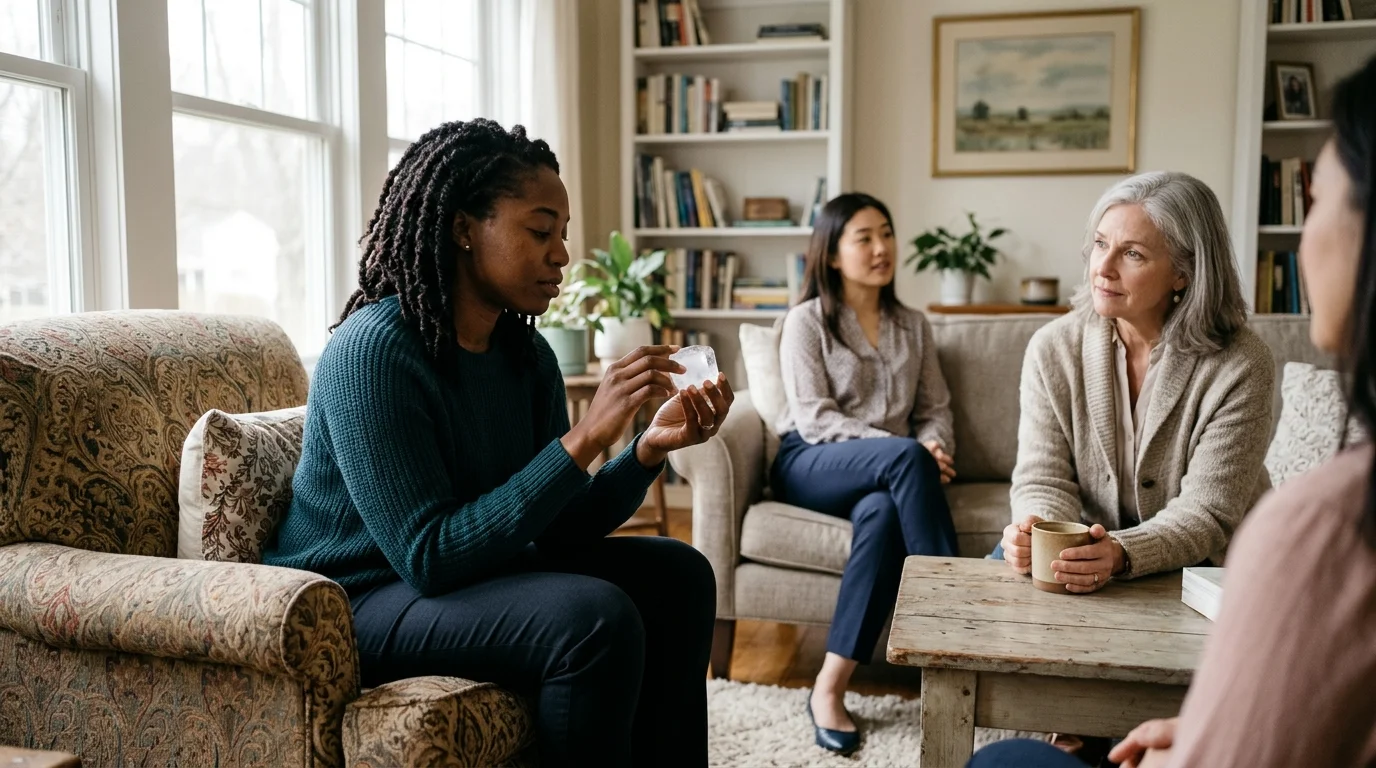
Yes, and for most women it’s the single most important piece of recovery. Counseling gives you a consistent, confidential space to talk about what’s underneath the urge, rather than just managing the urge itself. A skilled therapist will help you figure out what you’ve been using self-harm to cope with, rather than simply telling you to stop.
At The Rose House, this looks like individual therapy paired with group work, because healing in community tends to reduce the shame that keeps self-harm hidden in the first place. Women often tell us that hearing another woman describe the exact same urge, the same shame spiral, the same relief followed by regret, is the first time they’ve felt understood rather than judged.
Client Spotlight
A woman named Olivia came to us after years of hiding cut marks under long sleeves, even in summer. She’d been in outpatient therapy twice before but never told either therapist the full extent of it. In group, she finally said it out loud: that cutting was the only thing that made the noise in her head stop. Through DBT skills work and trauma processing, she started identifying the moments right before an urge, the tight chest, the racing thoughts, and practicing a different response in that window. By the time she transitioned into continuing care, she’d gone months without self-harming and described feeling, for the first time, like she had options besides her own skin.
How to Stop Urges to Self-Harm
Urges to self-harm tend to build, peak, and pass, usually within a short window if they’re not acted on. The goal of urge management is to help you survive the wave without reaching for the old coping tool.
Here are strategies our clinical team teaches and that women can start using right away:
- Delay the action. Tell yourself you’ll wait just a few minutes before doing anything. Urges often weaken simply with time.
- Use intense sensory input. Holding ice, snapping a rubber band, or taking a cold shower can mimic the physical jolt some women are seeking.
- Name the feeling out loud. Saying “I feel like I’m going to explode” to yourself or someone else can defuse some of its power.
- Move your body. A short walk, push-ups, or even pacing can burn off the physical charge behind the urge.
- Reach someone. A friend, a sponsor, a crisis line, anyone who can simply stay on the phone with you while the wave passes.
What Do People Do Instead of Self-Harm?
Alternative coping mechanisms work best when they’re specific to what the self-harm was providing. If it’s about physical sensation, cold water or ice can substitute. If it’s about release, screaming into a pillow or hitting a punching bag works for some women. If it’s about control, something as small as reorganizing a drawer can meet that same need without causing injury.
What to Do if You Relapse on Self-Harm?
A relapse means treatment can continue and progress can still be made. Get safe, tend to any wound that needs care, and then tell someone, a therapist, a sponsor, a trusted friend, rather than carrying it alone in shame. What you do in the hour after a relapse matters more than the relapse itself.
Many women who eventually build lasting recovery had setbacks along the way. The difference between a setback and a full return to old patterns usually comes down to whether the woman isolates afterward or reaches out. Shame tells you to hide it, while recovery asks you to say it out loud.
How Do You Recover From Self-Harm, and Do People Actually Get Better?
Women do recover from self-harm, often fully, when treatment addresses the underlying emotional pain rather than just the visible behavior. Recovery tends to involve learning new coping skills, processing the trauma or distress driving the urges, and rebuilding a sense of safety in your own body over time.
What does recovery actually look like day to day? It’s rarely a straight line. It looks like noticing an urge and using a skill instead of the old behavior, telling a therapist about a bad week instead of hiding it, and watching scars fade, physically and emotionally, while you build a life that doesn’t require self-harm to survive it. Extended residential care, 90 days or more, gives women time to practice these skills enough times that they become automatic, rather than something they’re white-knuckling through on willpower alone.
| Recovery Stage | What It Typically Involves | Approximate Focus |
|---|---|---|
| Stabilization | Safety planning, medical evaluation, reducing frequency of self-harm | First weeks of treatment |
| Skill-building | DBT and CBT skills, identifying triggers, urge surfing | Ongoing through residential care |
| Processing | Trauma therapy (EMDR, somatic work), addressing root causes | Mid-to-later residential care |
| Integration | Practicing skills in daily life, family therapy, relapse planning | Continuing care and beyond |
This table shows why time matters so much in this kind of recovery. Skipping straight to “integration” without the earlier stages is part of why shorter programs sometimes see women return to self-harm after discharge.
What Can a GP Do About Self-Harm?
A general practitioner can be an important first stop. A GP can treat any physical wounds, screen for immediate safety risk, refer you to a therapist or psychiatrist, and in some cases start a conversation about medication if depression or anxiety is part of the picture. A GP is typically limited to these initial steps, since self-harm usually requires sustained, specialized therapy beyond what a GP provides.
What Medication Helps With Cutting?
There’s no medication approved specifically to stop self-harm. However, SSRIs and other medications used for depression, anxiety, or mood disorders can reduce the intensity of the underlying distress that fuels self-harm urges. Medication works best as a complement to therapy. A psychiatric evaluation can help determine what, if anything, makes sense for your situation.
Do Scars From Cuts Ever Go Away, and What Helps Them Fade?
Scars often fade significantly over time, though they rarely disappear entirely, and healing varies a great deal from person to person. Keeping wounds clean, using sun protection on the area, and in some cases dermatologist-recommended scar treatments can help minimize visibility, but there’s no guaranteed fix for every scar. For many women, the emotional healing matters more than the physical mark ever did.
Where Can I Get Help From Self-Harm, and Do People Go to Rehab for It?
You can start with a therapist, a psychiatrist, your GP, or a crisis line if you’re in immediate danger, and from there get connected to the right level of care. Yes, women do seek residential treatment for self-harm, particularly when outpatient therapy hasn’t been enough to interrupt the pattern, or when self-harm co-occurs with substance use, an eating disorder, or a primary mental health condition.
Residential treatment makes sense when self-harm has become frequent, severe, or resistant to outpatient care, or when it’s tangled up with other struggles that need to be addressed together rather than in separate appointments scattered across different providers. At The Rose House, women don’t need a substance use disorder to be admitted. We treat primary mental health conditions, including self-harm, on their own terms. Our residential program combines individual therapy, group therapy, psychiatric care, and family involvement across a structured schedule, all within a 17-bed home-like setting rather than a hospital environment.
Helping Someone Who Self-Harms
If you’ve found out that your daughter, wife, sister, or friend is self-harming, your instinct might be to panic, demand she stop, or hide every sharp object in the house. Take a breath. None of those reactions tend to help, and some make a woman less likely to open up again.
What to Say to Someone Who Is Self-Harming?
Lead with concern, not alarm. Something like, “I noticed this, and I’m not upset with you, I just want to understand what’s going on” opens a door rather than closing one. Avoid demanding she stop immediately or reacting with shock, since both responses can push her further into secrecy.
What to Avoid Saying to Someone Who Self-Harms
Avoid phrases like “just stop,” “that’s so dangerous, why would you do that,” or “you’re doing this for attention.” These responses, even when well-intentioned, tend to increase shame, and shame is often part of what’s fueling the behavior in the first place. Try not to react with visible horror, even if that’s exactly what you’re feeling inside.
How to Help Someone Who Self-Harms
Supporting someone who self-harms means staying calm, staying present, and helping her access real care rather than trying to fix it yourself. You’re not expected to be her therapist.
- Ask direct, caring questions instead of making assumptions
- Avoid ultimatums (“stop or else”) that increase shame and secrecy
- Help her find a therapist, psychiatrist, or treatment program
- Take any mention of suicidal thoughts seriously and seek immediate help
- Take care of your own emotional needs too, this is heavy to carry
If you’re a parent trying to figure out whether your daughter’s self-harm has crossed into needing a higher level of care than weekly therapy can offer, that’s a legitimate and common concern, and it’s okay to ask for guidance on what level of treatment actually fits.
How The Rose House Approaches Self-Harm Treatment

We’ve built our program around the belief that self-harm is almost always a symptom of something deeper, usually trauma, and that treating the behavior without treating the root rarely holds. Our clinical team draws on CBT, DBT, EMDR, and somatic approaches, delivered through more than 35 hours a week of therapist-led individual and group work, because lasting change takes repetition and time, not a single breakthrough session.
What makes our setting different is scale and intention. We house 17 women at a time in a converted prairie home near Boulder, Colorado, which means no woman becomes a case number here. Every client works with a primary therapist, a case manager, and a family therapist, all coordinating on the same treatment plan. We’re state licensed in Colorado and Joint Commission accredited, and our founder, a PhD psychologist, still owns and operates the program she started in 2007.
Families are part of this too. We offer weekly family therapy, family support groups, and Family Clinical Weekends, because self-harm rarely affects just the woman experiencing it. Parents, partners, and children carry their own fear and confusion, and healing works better when the whole system gets support, not just the individual in treatment.
If you or someone you love is caught in this cycle, you don’t have to figure out the next step alone. Reach out to our admissions team. We’re here to answer your questions with honesty and compassion, and to help you understand whether The Rose House is the right fit. Women get better here, and that healing can start with a single conversation.
Supporting Articles
- Trauma Treatment for Women: Learn how trauma-focused therapy addresses the root causes that often drive self-harm and other coping behaviors.
- Treatment of Depression in Women: Explore how depression and self-harm frequently occur together and how integrated treatment addresses both.
- Rehab for Mental Health: A look at residential mental health treatment for women who don’t have a co-occurring substance use disorder.
- PTSD, CPTSD: Understand how complex trauma responses connect to self-harm and other coping mechanisms women develop over time.
- How to Get Out of Dysregulation?: Practical insight into managing overwhelming emotional states, a core skill in reducing self-harm urges.
Frequently Asked Questions
Dialectical Behavior Therapy (DBT) has the strongest track record for reducing self-harm because it directly targets emotional distress tolerance and crisis skills. It’s often combined with trauma-focused therapies like EMDR when past trauma is part of the picture.
Stay calm, acknowledge her pain without judgment, and avoid reacting with shock or anger. Let her know you’re there to help her find real support, not to punish or lecture her.
Approach her gently and directly, naming what you’ve noticed without accusing her. A simple, caring question is far more effective than confronting her with suspicion or evidence.
Several apps offer urge-tracking, grounding exercises, and crisis resources, and they can be a helpful supplement between therapy sessions. They work best alongside professional treatment, not as a replacement for it.
Hospitals focus on medical treatment of wounds and immediate safety assessment, and may recommend a higher level of psychiatric care if risk is significant. Hospitalization addresses the acute moment, but ongoing therapy is usually what’s needed to interrupt the pattern long term.
Open, non-judgmental conversation is the most effective tool, paired with accurate information about why self-harm happens and how to respond. Reducing shame around the topic makes it more likely someone will ask for help before a crisis.
Many women benefit from both, a therapist for ongoing skills work and processing, and a psychiatrist if medication for an underlying mood or anxiety disorder might help. A combined approach often produces better results than either alone.