There’s a version of this story that most people don’t know. A woman who keeps pushing people away. Who makes choices that hurt the people she loves — and feels very little about it afterward. Who has been labeled “difficult,” “manipulative,” or “beyond help” by professionals and family members alike. If that sounds familiar — whether you’re living it or watching someone you love live it — you deserve real answers.
Antisocial personality disorder (ASPD) is a mental health condition characterized by a chronic, pervasive pattern of disregarding and violating the rights of others. People with ASPD consistently show behaviors that are exploitative, deceitful, or harmful — and typically experience little to no remorse. It is a longstanding pattern of behavior and experience that begins in early life and shapes how a person relates to the world.
The Rose House has been treating women with complex mental health conditions — including personality disorders — since 2007 from our boutique 17-bed residential facility in Boulder County, Colorado. Our clinical team of PhD and Masters-level clinicians, board-certified medical providers, and licensed addiction specialists is specifically trained to treat the kind of deep, underlying trauma that drives conditions like ASPD. We hold Joint Commission accreditation and state licensure for behavioral health in Colorado, and we’ve built our entire model around one truth: women get better here.
What Is Antisocial Personality Disorder?
ASPD is a mental health condition in which a person consistently shows no regard for right and wrong — and repeatedly violates the rights, feelings, and safety of others. It’s classified as a Cluster B personality disorder, a group that includes borderline personality disorder and narcissistic personality disorder, among others.
Here’s the thing: ASPD is not about being introverted or preferring to be alone. “Antisocial” in this context doesn’t mean shy. It means behaving in ways that are against social norms, expectations, and the well-being of others — often persistently and without guilt.
ASPD is a longstanding pattern of behavior and experience. It isn’t situational. It doesn’t come and go with stress. It shapes nearly every relationship and decision a person makes over time.
What does it feel like from the inside? Often: emptiness, irritability, a sense that rules don’t apply, and a chronic inability to sustain meaningful connections.
Signs and Symptoms of Antisocial Personality Disorder
Recognizing ASPD isn’t always straightforward — especially in women. Research suggests ASPD is underdiagnosed in women and is frequently misidentified as borderline personality disorder, bipolar disorder, or even depression. If you’re wondering whether what you’re seeing — in yourself or someone you love — fits the profile, here are the signs to understand.
The Core Symptoms
What are 5 symptoms of antisocial personality disorder?
- Persistent deceitfulness — repeated lying, using aliases, or manipulating others for personal gain
- Impulsivity and failure to plan ahead — acting without thought for consequences
- Irritability and aggression — frequent conflicts, hostility, or physical altercations
- Reckless disregard for safety — of self or others
- Lack of remorse — indifference or rationalization after hurting, mistreating, or stealing from others
A diagnosis of ASPD also requires a history of conduct disorder before age 15 — meaning early behavioral signs are part of the clinical picture.
Red Flags of ASPD
What are the red flags of ASPD? Watch for a pattern that includes:
- Consistent disregard for rules, laws, or authority
- A history of broken relationships, jobs, or living situations
- Chronic irresponsibility — financial, professional, or personal
- Frequent blaming of others for problems that are self-created
- Intimidation or manipulation as go-to communication styles
- A superficial charm that doesn’t match the depth of actual connection
ASPD in Women: A Different Presentation
Women with ASPD don’t always look like the dramatic portrayals in film and television. In women, the disorder is characterized by a pattern of socially irresponsible, exploitative and guiltless behaviors — but these behaviors may manifest more through emotional manipulation, deception, and relationship instability than through physical aggression.
This is one reason why ASPD in women is so frequently missed. Clinicians may default to diagnoses like bipolar disorder, borderline personality disorder, or even cannabis use disorder — particularly when substance use is also present. Women with ASPD deserve an accurate diagnosis and specialized care. Not a label that fits someone else’s pattern.
ASPD and Co-Occurring Conditions in Women
ASPD rarely exists in isolation. Want to know what makes this condition especially complex to treat? It’s the web of co-occurring diagnoses that so often accompany it.
| Co-Occurring Condition | How It Interacts with ASPD |
|---|---|
| Bipolar disorder | Mood cycling can intensify impulsivity and aggression |
| Substance use disorders | Including cannabis use disorder, alcohol use disorder, and others — often used to manage emotional dysregulation |
| PTSD / trauma | Trauma is frequently at the root of personality disorder development |
| Depression and anxiety | Emotional pain that drives disconnection and self-destructive behavior |
| Borderline personality disorder | Often co-diagnosed; overlapping emotional dysregulation features |
Understanding signs of bipolar disorder in women alongside ASPD is important because these two conditions share overlapping features — impulsivity, irritability, poor decision-making. But they’re not the same, and they require different treatment approaches. Similarly, symptoms of bipolar disorder in women (like mood cycling, grandiosity, or risky behavior) can be misread as ASPD when the underlying driver is actually a mood disorder.
The clinical picture for women with ASPD is almost always multilayered. Bipolar disorder in women, substance use, and trauma frequently show up together — which is exactly why a trauma-focused, dual diagnosis model of care matters so much.
Client Spotlight
Diane had been in and out of therapy for six years before her family reached out to The Rose House. Her therapist had diagnosed her with bipolar disorder, and while she did have mood episodes, something deeper was consistently driving her choices — the repeated deceptions, the fractured friendships, the inability to sustain employment. Her mother, exhausted and heartbroken, called us during what felt like the hundredth crisis. What she found was a clinical team that didn’t dismiss her daughter’s history or reduce her to a single diagnosis. Over the course of residential treatment, Diane began — slowly, painfully, genuinely — to connect her earliest childhood experiences to the patterns she’d spent her adult life repeating. It wasn’t a quick fix. Nothing real ever is. But her mother told us later: “For the first time in years, I have my daughter back.”
Does ASPD Go Away?
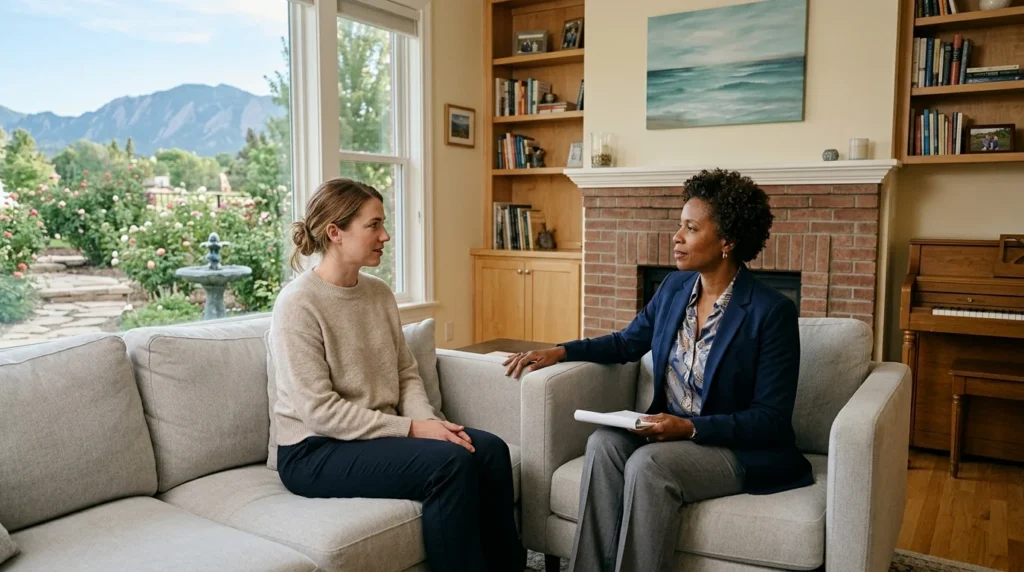
Can bipolar disorder go away? Does bipolar disorder go away? People ask similar questions about ASPD. The honest answer is: ASPD is a chronic condition. It doesn’t simply resolve with time. But — and this matters — that doesn’t mean people can’t change. It doesn’t mean treatment is useless.
Here’s what the research actually supports:
- Symptoms often decrease with age. Particularly the most externally disruptive behaviors — aggression, criminality, impulsivity — tend to diminish in middle age for many people with ASPD.
- Co-occurring conditions are highly treatable. When bipolar disorder, substance use disorders, trauma, or depression are addressed, the overall clinical picture often improves significantly.
- Therapy can build capacity for reflection and empathy. While ASPD is resistant to many traditional approaches, modalities like DBT, schema therapy, and trauma-focused work can create meaningful change when applied by skilled clinicians in an intensive setting.
The goal isn’t to “cure” a personality disorder. The goal is to help a woman build a life she can sustain — one where her relationships, her choices, and her relationship with herself reflect growth rather than repeating cycles of harm.
How Treatment Works for Women with ASPD
What does treatment actually look like? Not a lecture series. Not a short-term stabilization program. Real treatment for ASPD — especially in women — requires time, depth, and a clinical framework built around understanding trauma as the root.
Effective treatment for ASPD typically includes:
- Individual psychotherapy — particularly DBT, CBT, and trauma-focused modalities like EMDR and Internal Family Systems (IFS)
- Group therapy — the community experience is essential; women learn from and with each other in ways that individual sessions can’t replicate
- Trauma treatment — because trauma, in one form or another, is at the root of most personality disorders
- Psychiatric evaluation and medication management — co-occurring conditions like bipolar disorder in women or depression must be treated alongside the personality disorder
- Somatic and body-based therapies — helping women reconnect with their bodies and emotional experience
- Sustained duration — 90+ days of residential care, followed by a continuing care program, is evidence-based for complex presentations
Client Spotlight
Priya’s husband called The Rose House from a parking lot. He’d just found out about the third financial deception in two years — money moved, explanations that didn’t hold up, consequences that fell on him alone. He wasn’t sure if she was addicted, mentally ill, or simply unwilling to change. He wasn’t sure if he should be furious or frightened. Our team helped him understand what he was seeing — not to excuse her behavior, but to give it a clinical context that could actually be treated. Priya entered our residential program several weeks later. The work she did in those first months wasn’t easy. But her willingness to begin — and his willingness to stay engaged through the family program — made all the difference.
What Sets the Rose House Apart for Women with Personality Disorders
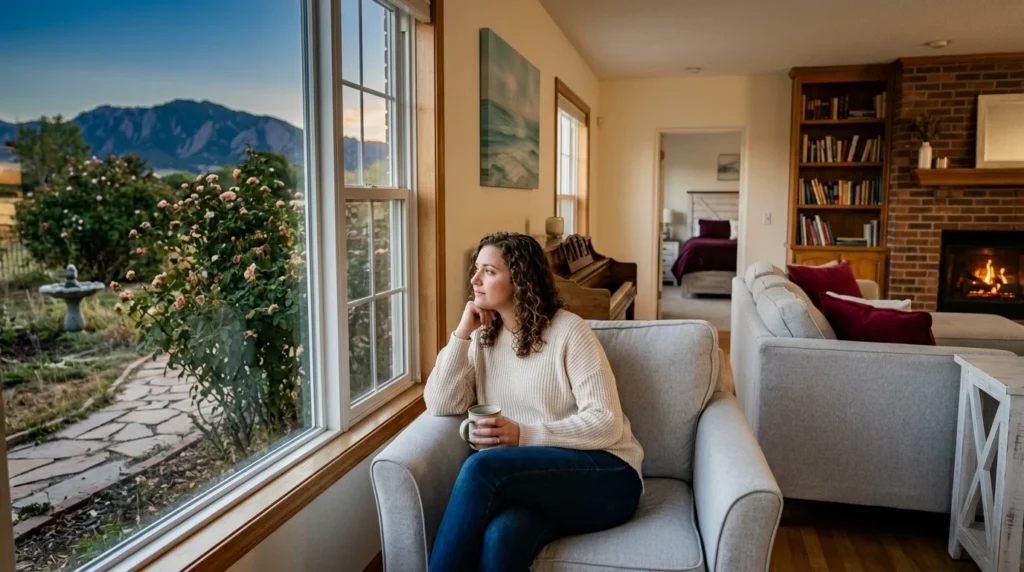
Why does the setting of treatment matter? Because a 17-bed women-only program in the Colorado countryside is a fundamentally different environment than a large co-ed institutional facility.
At The Rose House, every woman is seen, heard, and valued — not as a diagnosis or a case file, but as a human being doing the hardest work of her life. Our clinical team brings decades of combined experience treating the full spectrum of women’s mental health conditions — from primary mental health presentations with no substance use history to complex dual diagnosis cases involving trauma, personality disorders, substance use disorders, and co-occurring conditions like bipolar disorder.
Our program is state licensed by Colorado to treat behavioral health — including primary mental health and substance use disorder — and holds Joint Commission accreditation, the gold standard in healthcare quality.
We’ve been doing this since 2007. Not a corporate operation. Not a quick-turn program. A deeply personal commitment to the women who walk through our doors.
The extended care model — a minimum of 90 days residential, with an ideal 9-month plan that includes step-down continuing care — exists because that’s what the evidence supports for lasting change. Especially for personality disorders. Especially for women.
Our team doesn’t just treat symptoms. We help women understand the experiences that shaped them — the trauma, the early relational wounds, the moments that taught them the world wasn’t safe — and begin to live differently. That is the work. And it’s possible.
Supporting Articles
- Symptoms of Personality Disorders — Explore the full spectrum of personality disorder presentations in women, including how symptoms manifest differently across diagnoses and why accurate assessment matters for treatment planning.
- Bipolar Disorder in Women — Understand how bipolar disorder presents specifically in women, how it overlaps with and differs from personality disorders, and what evidence-based treatment looks like.
- Dual Diagnosis for Women — A deep look at co-occurring mental health and substance use disorders in women, and why integrated treatment is essential for lasting recovery.
- Trauma Treatment for Women — Because trauma is at the root of most personality disorders, this resource explains how trauma-focused care works and why it’s foundational to the Rose House model.
- Will Bipolar Go Away — Honest answers about the long-term course of mood disorders and personality conditions, and what sustained treatment actually offers women over time.
Frequently Asked Questions
The five core symptoms of ASPD are persistent deceitfulness, impulsivity, irritability and aggression, reckless disregard for the safety of self or others, and a consistent lack of remorse. These behaviors follow a chronic, pervasive pattern — they aren’t occasional or situational. A formal diagnosis also requires evidence of conduct disorder symptoms before age 15.
Most people with ASPD do understand the difference between right and wrong on a cognitive level. What’s impaired is the emotional and moral weight they assign to those distinctions. They may know an action is harmful but feel little to no guilt or regret about it — which is what drives the persistent disregard for others’ rights that defines the disorder.
Red flags include a consistent pattern of lying or manipulation, chronic irresponsibility across work and relationships, intimidation or hostility as a default communication style, repeated violations of rules or laws, and an inability to sustain meaningful connections. In women, these patterns may be more interpersonal and less overtly aggressive than in men.
Both conditions can involve impulsivity, mood instability, and risky behavior — which is why they’re often confused. Bipolar disorder in women is a mood disorder driven by cycling episodes of mania and depression. ASPD is a personality disorder characterized by a longstanding pattern of disregard for others, not mood episodes. Many women have both, making accurate dual diagnosis assessment essential.
Yes — meaningful improvement is possible, particularly with extended, trauma-focused residential treatment. While ASPD is a chronic condition, co-occurring disorders (like bipolar disorder, PTSD, and substance use disorders) are highly treatable, and intensive therapy can help women develop greater self-awareness, empathy, and healthier relationship patterns over time.
Yes. The Rose House treats women with personality disorders — including ASPD — as well as co-occurring mental health conditions and substance use disorders. Our clinical team is experienced in treating complex, layered presentations. You don’t need a substance use disorder to be admitted. If you’re not sure whether The Rose House is the right fit, reach out — we’ll help you figure it out together.
Borderline personality disorder, ASPD, and narcissistic personality disorder are among the most clinically complex personality disorders and are often cited as the most disruptive to daily functioning and relationships. All three can be effectively addressed within a trauma-informed, extended residential care model — particularly when co-occurring conditions like bipolar disorder or substance use are treated at the same time.